Bringing home a new puppy is exciting – and a little overwhelming. Those tiny paws and wagging tails are irresistible, but behind the cuteness is an important responsibility: teaching your puppy how to navigate the world confidently and calmly.
Early, positive training isn’t about perfect obedience. It’s about building trust, encouraging good habits, and supporting your puppy’s wellbeing.
At Petcover Australia, we believe training should be gentle, age-appropriate, and stress-free. This guide gives you all the information you need, from basic commands to common puppy problems, with step-by-step instructions and advice for each stage of your puppy’s development.
Jump to:
Before puppy training begins (8–10 weeks)
Before diving into structured commands, remember this is your puppy’s chance to feel safe, loved, and right at home. It’s a special time for bonding, building trust, and simply getting to know the incredible new member of your family.
Step-by-step foundation building:
- Establish a routine – your puppy should feed, toilet, and sleep at roughly the same times each day.
- Name recognition – say your puppy’s name in a happy tone, and reward them with a treat or gentle petting when they look at you.
- Short positive interactions – play gentle games, like a short game of fetch or tug-of-war, for 2–3 minutes at a time.
- Calm environment – limit loud noises or sudden changes while your puppy adjusts.
These short, gentle interactions build trust and set the stage for future learning. At this age, just a few minutes of positive engagement a day is enough.

Puppy first commands (10–14 weeks)
Once your puppy feels settled, you can begin introducing simple commands. You’ll soon find that puppies learn best through repetition and reward.
How to teach a puppy ‘Sit’
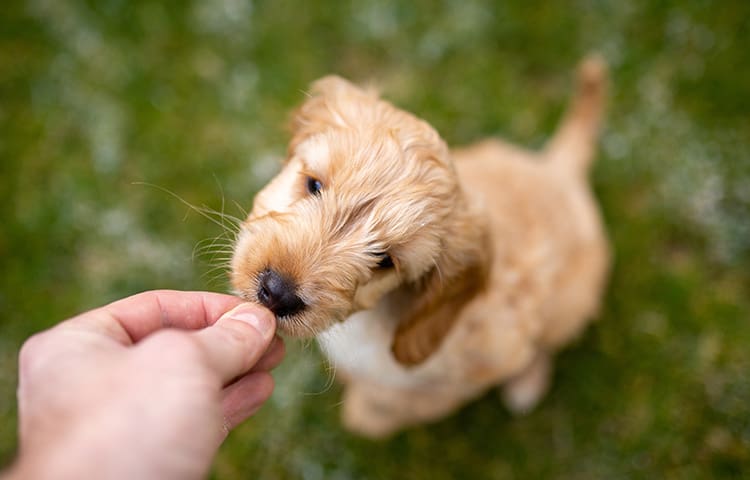
- Get your puppy’s attention with a treat.
- Move the treat above their nose and back over their head.
- As their bottom lowers, say “Sit.”
- Immediately reward with the treat and verbal praise, such as saying “yes”.
- Repeat several short sessions a day.
Training video resource: Purina Australia – How to teach a puppy to sit
How to teach a puppy ‘Come’
- Start in a quiet, enclosed area with no distractions.
- Call your puppy by name, then say “Come” in an excited tone.
- When they move toward you, reward with treats, praise, or play.
- Gradually practice with more distractions and longer distances.
Introducing a puppy to leads
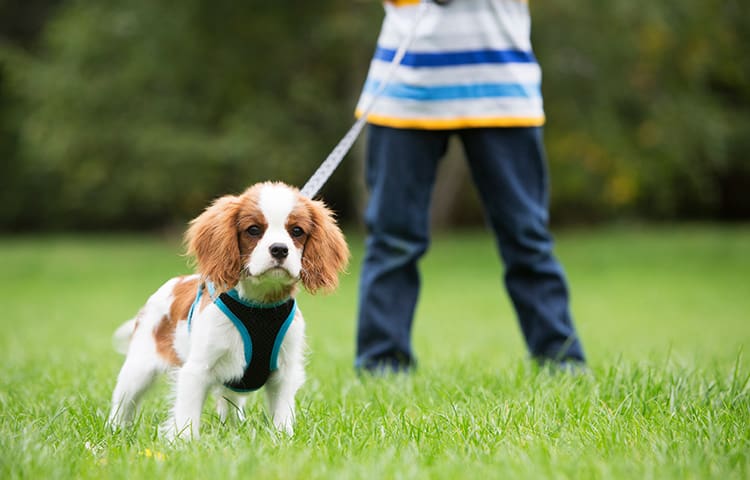
- Let your puppy wear a collar or harness for short periods indoors so they can get used to how it feels.
- Attach a lightweight lead and let them drag it around to get used to it.
- Encourage them to follow you around and reward them with treats or playtime.
- Reward calm walking; stop and redirect if they pull.
Puppy socialisation and confidence building (12–16 weeks)
This is a crucial socialisation window. Puppies who have positive early experiences tend to grow into calmer, more resilient adult dogs.
Tips for puppy socialisation:
- Go slow. Introduce new people, places, and other pups one at a time to avoid overwhelming your puppy.
- Watch their cues and pay close attention to your puppy’s body language. If they seem scared or anxious (trembling, tucking the tail, cowering, avoiding eye contact, or whining), take a step back.
- Reward the brave. When your puppy shows calm or curious behaviour, reward them with a tasty treat or gentle praise.
- Practice makes perfect. Regular, positive experiences help your puppy build confidence and create happy associations.
Don’t forget the daily details: gently expose your puppy to everyday sights and sounds like cars, vacuum cleaners, and doorbells to help them feel safe and secure.
As your puppy grows, they enter a key learning period—perfect for more advanced training. Reinforce good habits and prevent unwanted behaviours from becoming ingrained.
How do you train a puppy to ‘Stay’
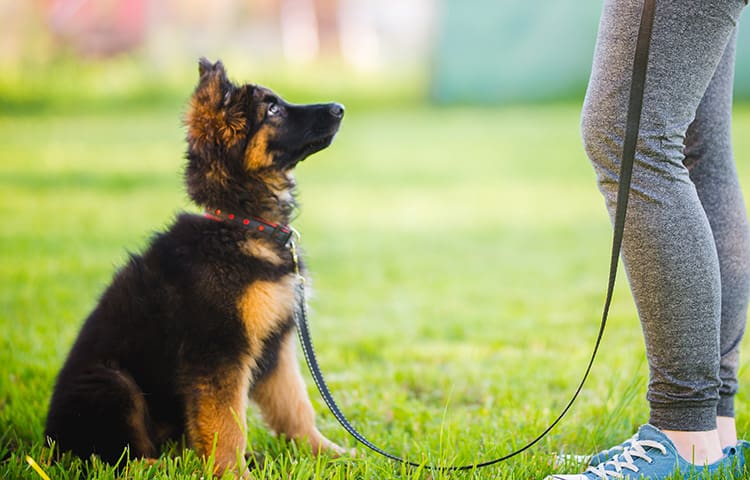
- Ask your puppy to “Sit.”
- Open your palm in front of them and say “Stay.”
- Step back one step; if they hold position, return and reward with a treat or praise.
- Gradually increase the distance and duration. Always reward calm behaviour.
How to teach a puppy threshold training
- Ask your puppy to “Sit” before doors or gates.
- Open the door a little, then slowly open it more, ensuring they stay put.
- Hold the door open and release them with an “Ok” or “Go” cue.
- Reward them for waiting patiently.
- Repeat until waiting at a door or gate becomes routine.
How to teach a puppy loose lead walking
- Start in a quiet, familiar area.
- Encourage walking beside you with treats or a toy to keep their attention.
- If your puppy pulls, stop walking. Once the lead is slack, start walking again.
- Reward your puppy’s calm, loose-lead walking often with treats and praise
How to stop nipping and biting
- When your puppy starts to bite, immediately redirect their attention to a suitable chew toy. This teaches them what is acceptable to chew on.
- Pause play if they nip at hands or feet.
- Reward gentle behaviour and gradually increase playtime again.
Positive reinforcement for puppies
Reward-based training creates happier, more confident dogs and strengthens your bond. It’s the most effective, humane method for teaching desired behaviours, widely endorsed by RSPCA Australia.
How to use positive reinforcement effectively:
- Reward desirable behaviours immediately.
- Use treats, toys, or praise as incentives.
- Avoid punishment or harsh corrections.
- Keep sessions short and fun to prevent stress.
Training and overall wellbeing
Training is crucial for your puppy’s overall mental and physical health, and is important for their wellbeing.
- Builds confidence and reduces anxiety.
- Provides mental stimulation to prevent boredom.
- Complements regular vet checks, nutrition, playtime, and insurance.
Common puppy problems and solutions
Even with the best training, puppies test boundaries. Here’s how to address common behaviours in a gentle, effective way.
How to toilet train a puppy
- Take your puppy outside after waking, eating, drinking, or playing.
- Use the same spot each time.
- Say a consistent cue, e.g., “Go potty.”
- Reward immediately after they finish with a treat or praise.
- Always supervise your puppy indoors. If they have an accident, gently redirect them. Remember, it’s not their fault they went in the wrong place – you should have been watching them!
How to train a puppy not to bite
- Redirect unwanted chewing by offering your pup age-appropriate toys instead of your hands or furniture.
- Reward them with praise or a treat when they play gently.
- If they start nipping, press pause on playtime until they’ve calmed down.
- Consistency is key! Make sure everyone in the family responds to chewing and biting in the same way.
How to train a puppy not to bark
- First, pinpoint what’s setting off the barks.
- The moment the barking begins, calmly and clearly say “Quiet.”
- Reward that sweet silence instantly with a treat or praise!
- Then, gently steer their focus to a favourite toy or a familiar command.
- Remember, keep your voice steady – shouting only ramps up their stress!
How to train a puppy to not jump up
- When your pup jumps, turn your back on them. No eye contact, no talking, just turn away.
- The moment all four paws hit the ground, that’s your cue! Shower them with praise or a tasty treat.
- Replace jumping with a ‘sit’ when guests arrive.
- Make sure everyone in the family is on the same page. Consistency is key to success!
How to prevent separation anxiety in puppies
- Start with spending short stints of time away from your puppy, then slowly extend the time you’re away.
- Choose a safe, cosy space – like a comfy crate or a puppy-proof room – where they feel secure.
- Give them snuffle toys or puzzle feeders to keep them busy and distracted while you’re gone.
- Keep your arrivals and departures low-key to avoid making a big deal about your presence.
- If anxiety is persistent, don’t hesitate to reach out to a professional trainer or vet. They can provide tailored support.
Training and overall wellbeing
Training is crucial for your puppy’s overall mental and physical health.
How training supports wellbeing:
- Builds confidence and reduces anxiety.
- Provides mental stimulation to prevent boredom.
- Complements regular vet checks, nutrition, playtime, and insurance.
Petcover Australia is here to give you peace of mind as your puppy grows. While we can’t train your dog for you, we can help protect their health if the unexpected happens.
Find out more about puppy pet insurance