
Petcover Australia launches biggest sale of the year to help more Australians protect their pets amid rising living costs
Protect your pet for less this EOFY with 15% OFF
Read more8 April 2026
If you own a pedigree dog or a purebred cat, there’s a good chance you’ve heard about hereditary conditions. Hip dysplasia in Labradors. Heart disease in Cavalier King Charles Spaniels. Breathing problems in French Bulldogs. These are conditions baked into a breed’s genetics – and they’re among the most common (and most costly) health issues vets see.
Whether pet insurance covers hereditary conditions is one of the questions we’re asked most often. The short answer is yes – Petcover pet insurance does cover hereditary conditions. But there’s an important detail that every pet owner needs to understand, and it comes down to timing.
Jump to:
Hereditary conditions are health problems passed down through a pet’s genetics. They’re not caused by injury or infection – they’re built into the breed. Some are present from birth; others don’t show up until a pet reaches a certain age.
They’re different from congenital conditions, which are present at birth but not necessarily genetic in origin, though the two terms are often used interchangeably.
Hereditary conditions are particularly common in purebred and pedigree animals, where selective breeding over generations has concentrated certain genetic traits, including ones that carry health risks. Mixed breed animals aren’t immune either, but they’re generally considered lower risk for specific breed-related conditions.

Petcover Australia’s pet insurance covers hereditary conditions, provided they were not pre-existing at the time your policy started.
This is the key distinction that applies across the pet insurance industry, not just with Petcover. It’s not about whether a condition is hereditary or not, it’s about whether your pet was already showing signs of it, or had already been diagnosed, before your cover began.
If your pet develops a hereditary condition after their policy start date, and there were no prior symptoms or diagnoses, it’s treated like any other covered condition. The claim process is the same, and with a lifetime policy, that condition remains covered for your pet’s life as long as you keep renewing.
A pre-existing condition is any illness, injury or health issue that your pet showed signs of – or was diagnosed with – before your insurance policy started, or during the waiting period at the beginning of a new policy.
This matters more than many owners realise. If your Labrador had a vet visit for limping six months before you took out insurance, and is later diagnosed with hip dysplasia, that condition is likely to be treated as pre-existing – even if hip dysplasia wasn’t specifically mentioned in that earlier consult.
Insurers assess pre-existing conditions based on your pet’s full vet history. This is why it’s so important to insure your pet while they’re young and healthy, before any symptoms have a chance to appear on their record.
If you’re unsure about your pet’s history and how it might affect a claim, our team is always happy to talk it through. Contact us before you need to make a claim.
| ✔ Covered | ✖ Not covered |
|---|---|
| Hereditary conditions that develop after your policy start date | Conditions that were diagnosed or showing symptoms before cover began |
| Breed-related conditions your pet hasn’t yet developed at policy start | Conditions present during the waiting period at the start of a new policy |
| Ongoing treatment for hereditary conditions that developed while insured with Petcover Lifetime policies | Conditions excluded under the terms of your specific policy – always check your policy documents (PDS) |

Certain breeds are well known for specific hereditary conditions. Here are some of the most common one’s vets see – and the breeds most frequently affected.
This isn’t an exhaustive list – hereditary conditions can affect any breed. If you’re thinking about getting a pedigree pet, it’s worth researching the conditions most common to that breed and asking your breeder about health screening.
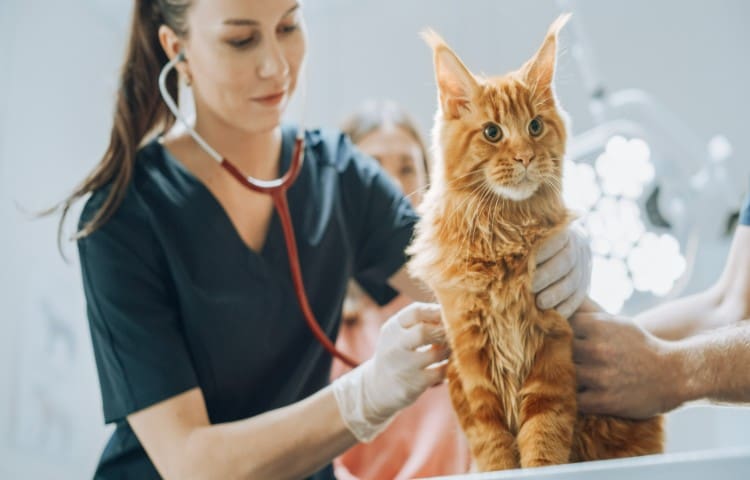
The earlier you take out cover, the more protection you have. It really is that straightforward.
A puppy or kitten insured from a young age – before any health issues have appeared – has the broadest possible cover. As they age and potentially develop hereditary or other conditions, those conditions are covered because they arose after the policy started.
Wait until your pet is older or already showing symptoms, and those same conditions become pre-existing – and uninsurable. You’d be taking on the full cost of treatment yourself, which for conditions like hip dysplasia surgery or ongoing cardiac management can run into thousands of dollars.
It’s also worth keeping your policy active once you’ve taken it out. Letting a policy lapse and then restarting means your insurer will reassess your pet’s health history – and any conditions that developed while you were covered could become pre-existing under the new policy.
We cover hereditary conditions as part of our standard policies. The key is getting cover in place early, while your pet is healthy, so that if something does develop down the track, you’re not facing those costs alone.
Ready to get cover in place for your pet? Get a quote today – it only takes a few minutes.
Get a quote