
Is horse insurance worth it? A realistic look at the risks Aussie horse owners face
A deep dive into the value of horse insurance
Read more14 January 2026
As summer approaches, rising temperatures and humidity can place significant strain on horses, particularly those in regular work or competition. Without appropriate management, hot weather can negatively impact both health and performance, increasing the risk of heat stress.
Horses are especially vulnerable during summer due to factors such as high ambient temperatures, humidity, poor airflow, dehydration, inadequate ventilation, and prolonged exposure to direct sunlight. When combined with exercise or transport, these conditions can quickly overwhelm a horse’s ability to regulate body temperature.
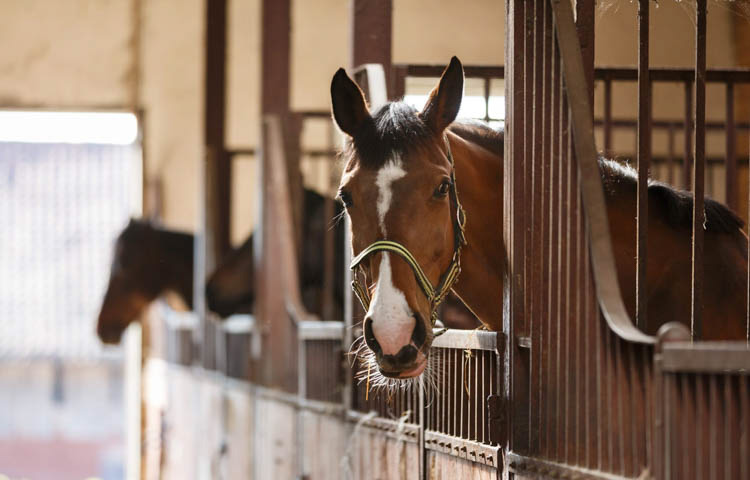
During exercise, a horse’s muscles convert energy into movement, with excess energy released as heat. To prevent overheating, horses rely on several key cooling mechanisms:
In hot or humid conditions, however, these natural cooling processes may become less effective. When a horse cannot adequately disperse excess heat, body temperature can rise to dangerous levels, leading to heat stress or, in severe cases, heat stroke.
Heat stress can develop during or after exercise and may worsen rapidly if not addressed.
Any combination of these signs warrants immediate attention.
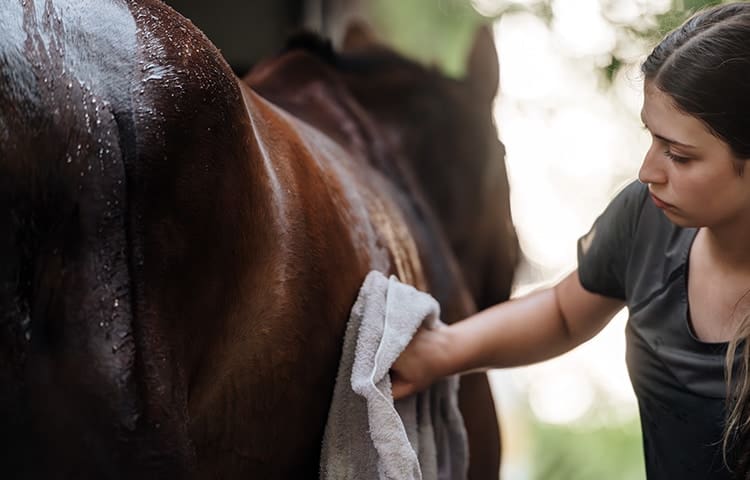
Sweating is one of the main ways horses cool themselves, but it can be difficult to detect – particularly in dark-coloured or thick-coated horses. Some horses may suffer from anhidrosis, a condition where sweating is reduced or absent, increasing the risk of overheating. To assess sweating:
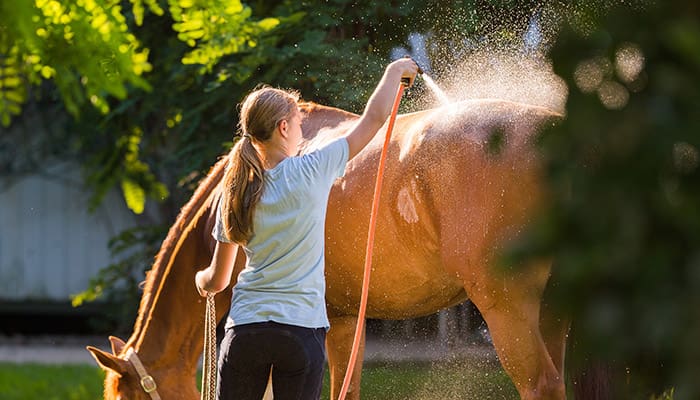
If you suspect your horse is experiencing heat stress, act immediately. Immediate steps include:
If symptoms persist, worsen, or if the horse’s temperature remains elevated, seek veterinary assistance immediately. A veterinarian can assess severity, provide treatment, and advise on recovery protocols.
Horses that have suffered significant heat stress may be more susceptible to overheating in the future. It’s important to monitor them closely in the days and weeks following a heat event and to reintroduce work gradually. A veterinary check is strongly recommended before returning to full exercise.
Preventative strategies such as adjusting exercise times, improving airflow, ensuring adequate hydration, and providing shade can significantly reduce the risk of heat stress during the warmer months.
Petcover specialises in offering quality, straightforward pet insurance with a range of policy options to suit your needs. Whether your pet is big or small, furry or scaly, our cover options are designed to help protect against unexpected veterinary costs. With cover available for dogs, cats, horses and exotic animals, you can focus on their wellbeing with confidence.
Get a quote*Cover is subject to policy terms, conditions, limits, applicable excess & exclusions. Please refer to the relevant PDS & TMD provided on this website before deciding to purchase this product.
The content on this blog is provided for general informational purposes only and does not constitute veterinary advice. Every horse is different, and their health needs may vary. If you suspect your horse is suffering from heat stress or any other health condition, consult a qualified veterinarian immediately.